LAST CALL Co-op & Friendship Tips
Keep the bit funny, the car almost home, and your duo ready to queue again after the crash.
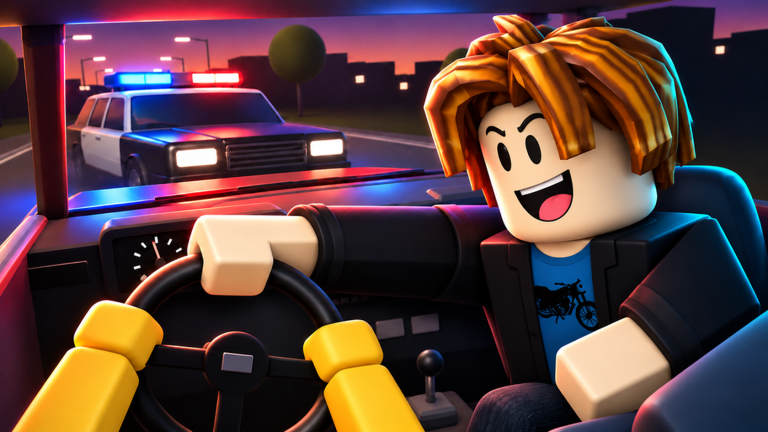
LAST CALL [BETA] is not a solo racing ladder—it is a friendship stress test wrapped in a free Roblox Sports & Racing experience by TAZ Syndicate. One of you is the Driver: eyes on the road, cops in the mirrors, home on the horizon. The other is the Passenger: licensed chaos who messes with car controls, distracts, and fishes for police attention. The shared punchline is simple: reach home in one piece through city streets and forest roads… if the friendship survives.
This page is the social contract guide. Mechanical depth lives in the driver guide, passenger guide, how to reach home, and avoid police pages. Use those for inputs and heat; use this page so you still want the same person in the other seat tomorrow. New players should open Getting Started and controls once before inventing house rules.
Why co-op rules matter more than raw skill
You can learn to feather a recovery. You cannot unsend a voice-chat meltdown after the passenger bricked the home stretch for the fifth identical reason. Soft agreements turn Mild Crude Humor into content instead of a mute. Hard silence turns every sabotage into a personal insult.
Good duos optimize for queueability: after a fail, both players still hit Play again. That metric beats any single clean arrival.
Pre-session contract (two minutes, huge ROI)
Before the first launch, answer these out loud:
- Chaos intensity — Chill / medium / full villain for run one.
- Veto policy — How many hard “cool it, cop ahead” calls does the driver get per segment?
- Seat plan — Who drives first, and when do you swap (after one fail, after one success, every two runs)?
- Clip goals — Are you hunting funny fails, clean homes, or both?
- Stop rule — When do you take a water break so tilt does not write the next chapter?
Write nothing fancy. Say it once. Revisit if someone is quietly miserable.
Callout language that actually helps
Short beats witty. Agree on a tiny lexicon:
| Callout | Meaning | Expected response |
|---|---|---|
| “Cooling” | Heat/truce window | Passenger eases cabin toys |
| “Burst” | Sabotage combo incoming | Driver shrinks ambition |
| “Cop ahead” | Patrol sight line | Both seats prioritize legal look |
| “Forest hot” | Entering bends too fast | Driver slows; passenger softens |
| “Home stretch” | Final approach rules | No random pride drifts |
| “Swap next” | Soft reset of roles | Finish this attempt, then switch |
If your duo hates scripted callouts, keep three: cooling, burst, cop ahead. That trio alone prevents most needless chases covered in the avoid police guide.
Chaos budgets by run type
Training night
Passenger plays soft. Driver learns city pacing and forest entries. Goal: two arrivals and one intentional near-fail for comedy. No villain stacks on the first corner.
Standard night
Medium chaos. Burst-and-cool rhythm. Honor vetoes near patrols. Celebrate clean recoveries as hard as crashes.
Content / villain night
Full passenger pressure. Driver practices recovery under fire. Still keep one emergency veto so the session does not become a thirty-second loop of identical spawn bricks.
Rotate night types across the week. Permanent villain mode burns drivers out; permanent chill mode bores passengers who queued for sabotage.
Seat swaps are friendship tech
Asymmetric co-op teaches empathy only if you actually sit in both seats.
- After a bitter fail, swap before arguing strategy for ten minutes.
- After a legendary arrival, swap so the hero driver tastes shotgun timing.
- When one player is clearly better at calm recovery, still rotate—skill gaps shrink faster with shared context.
Reading the passenger guide while you mainly drive (and vice versa) makes callouts smarter. Knowing which tools the tier list ranks high prevents “why did that spin us?” surprises.
Heat truces without killing the genre
LAST CALL wants betrayal. It also needs temporary cooperation or every run dies to police pressure.
Healthy truce pattern
- Driver calls “cooling” with a reason (patrol, forest entry, post-curb clip).
- Passenger honors it for a short stretch.
- Both resume the bit afterward—passenger may even announce the betrayal.
- Nobody treats the truce as a permanent nerf to the passenger fantasy.
Unhealthy patterns
- Driver spam-vetoing every gag until the passenger quits.
- Passenger never honoring a single veto, then blaming the chase on “bad driving.”
- Silent fuming instead of a one-sentence renegotiation of chaos intensity.
Deep heat habits belong on avoid police; social enforcement belongs here.
Voice chat etiquette under Mild Crude Humor
The experience tags Mild Crude Humor. That is permission for party-game roasting, not a blank check for real cruelty.
- Roast the car, the timing, the sirens—not permanent traits of your friend.
- Laugh at your own overcorrections when you drive.
- If someone says “too much,” dial intensity for a run. You can villain again after a water break.
- Mute third parties in the 8-player server if lobby noise ruins callouts; your duo still comes first.
Servers hold up to 8 players, but the fantasy is still a two-seat story. Protect that bubble.
Session structure that prevents tilt spirals
A durable night often looks like this:
- Warm-up arrival — Soft chaos, learn the map mood after any BETA patch.
- Standard attempts — Two to four runs with medium rules.
- Villain set — One or two high-chaos stories for clips.
- Swap block — Repeat a lighter version with seats reversed.
- Optional closer — One “serious try” where both want the driveway.
Between blocks, skim updates if the car suddenly feels different—LAST CALL is still BETA with active Roblox updates—and check codes only for real rewards. As of November 2026, no promo codes are confirmed. Treat scripts as a caution zone; this wiki does not invent loadstrings, and “auto troll” tools kill the joke and risk accounts.
Duo anti-patterns (stop these early)
| Anti-pattern | Why it hurts | Fix |
|---|---|---|
| Instant max chaos at spawn | Round ends before the joke develops | Budget chaos by phase |
| No mic / no chat | Every gag feels personal | Require callouts or text macros |
| Never swapping seats | Empathy debt piles up | Swap on a timer |
| Same home-stretch brick every time | Driver adapts into boredom or rage | Vary finale tools |
| Chasing fake codes mid-session | Breaks flow for nothing | Bookmark codes for later |
| Ignoring police until sirens | Soft heat becomes hard fail | Use cooling callouts |
Linking strategy and vibes
When the car is the problem, open mechanical pages: how to reach home for phases, avoid police for suspicion, controls when binds feel wrong after a patch. When the people are the problem, stay on this page and renegotiate intensity. The Guides Hub is the map; Players helps you decide if the BETA loop matches your friend group’s humor.
Micro-habits of duos that keep queuing
- Celebrate almost-wins as hard as clean homes.
- Name the death spiral in one sentence (“panic speed after horn”) instead of character attacks.
- Alternate who picks chaos intensity each night.
- Keep one sacred “serious try” so competitive friends get a dopamine hit.
- End on a laugh when possible—even a ditch can be a good closer if both people are still grinning.
Practice plan for friendship main characters
- Contract run — Speak the pre-session answers, then play one soft arrival.
- Callout run — Only the tiny lexicon; no essays mid-corner.
- Truce exam — Driver must land two successful coolings; passenger must honor both, then betray once on purpose later.
- Swap exam — Roles reverse; repeat a shorter version.
- Debrief — Thirty seconds: what felt fair, what felt mean, what to change next session.
Do this once and most lobbies feel smoother forever.
The real win condition
Mechanically, you win by reaching home. Socially, you win when both players want another ride. LAST CALL markets the question: can your friendship survive the road home? Answer it with clear chaos budgets, short callouts, honest seat swaps, and heat truces that still leave room for glorious betrayal on the final bend.
Queue together. Negotiate the bit. Survive the city. Respect the forest. Cool the heat when patrols appear. Laugh when you do not. Then swap seats and dare them to do it again.
Frequently Asked Questions
Quick answers for drivers and passengers.
What co-op rules should we set before playing LAST CALL?
Agree on chaos intensity (chill / medium / villain), how many police vetoes the driver gets, when you swap seats, and whether you want funny fails or clean arrivals tonight.
Should the passenger ever stop sabotaging?
Briefly, yes—during heat spikes or after a near fail so the round can continue. Temporary truces keep the story alive; permanent peace kills the fantasy.
How do callouts help in Driver vs Passenger?
Short lines like “cooling,” “burst,” and “cop ahead” sync both seats faster than arguing mid-corner, which cuts panic chases and tilted blame.
When should we swap seats?
After a bitter fail, after a big win, or on a simple timer. Swapping builds empathy and makes sabotage and recovery both smarter.
Where do we learn police and route tactics as a duo?
Read avoid police and how to reach home, then use this page to enforce the social rules that make those tactics stick.